
Rigor or Belonging? Why Families Shouldn’t Have to Choose
Rigor or belonging, why families shouldn’t have to choose. The short answer: Choosing a private school does not have to mean giving up cultural community, diversity of thought, or a place where your child is fully seen. The right school offers academic rigor and cultural affirmation together. At Holy Trinity: An Episcopal School, a PreK through 8th grade community in Bowie and Glenn Dale, Maryland, rigor and belonging are not competing priorities. They are the work.
The question behind the school tour
Every fall, families sit across from us in admission meetings and ask some version of the same question. It is rarely the first one they ask, but it is often the one that matters most.
Will my child be known, challenged, and celebrated here?
For many families, and especially many Black families, that question also means: Will my child be surrounded by people who look like them and understand them?
For many parents, especially Black parents, the decision between public and private school feels like a trade. One path may promise smaller classes and higher expectations. The other may promise a community that reflects their child’s culture, history, and identity. Families worry that choosing one means sacrificing the other.
That worry is reasonable. It comes from lived experience. Many parents remember being one of a few Black students in a classroom, or watching a child come home tired from explaining their hair, their name, or their family. They know that a school can be academically strong and still leave a child feeling invisible. Families of every background know some version of that feeling: a school that looks strong on paper but does not truly see their child. Belonging is not a niche concern. It is a condition for learning.
We want to address that concern directly, and we speak from experience. Holy Trinity: An Episcopal School is a predominantly Black school community, and we see every day what happens when children do not have to choose between being seen and being challenged. We think the choice itself is the problem.
What parents are really weighing
When families compare schools, they are usually weighing four things at once:
- Academic rigor: Will my child be challenged, known, and prepared for what comes next?
- Belonging: Will my child see themselves in their teachers, classmates, curriculum, and school leaders?
- Character and values: Will the school help shape who my child becomes, not only what they know?
- Cost: What will this cost our family, financially and socially?
Too often, families are told they can have only two or three of these. A school with strong outcomes may feel culturally isolating. A school that feels like home may not offer the challenge a child needs. Families should be able to expect all four.
A national conversation about an old dilemma
This fall, journalist Nikole Hannah-Jones brought the dilemma into the open. In a New York Times Magazine essay, “In Fighting for Every Black Child, Did I Betray My Own?” (September 20, 2026), she revisited a decision she and her husband made a decade earlier: enrolling their daughter in under-resourced, predominantly Black public schools in Brooklyn as an expression of their commitment to educational equity.
Ten years later, she reflects honestly on what that choice cost her daughter academically, writing that she feels she “failed both my values and my child.” The essay sparked a wide national response from parents, educators, and commentators across the political spectrum.
We will not try to settle every argument the essay raises. Public schools serve millions of children well, and the questions she asks about equity and access warrant serious attention. What struck us is the decision underneath it all: the sense that Black families are too often forced to choose which kind of harm to risk.
Our Head of School’s response
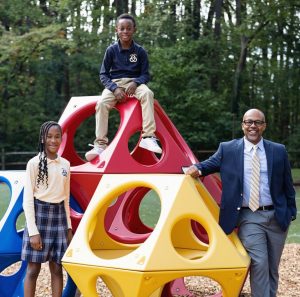
The essay sparked an important conversation inside our own community. Head of School DeAndre Calhoun shared his reflections on LinkedIn:
“Her essay reflects a false choice too many Black families are asked to confront: Do I choose a school where my child will be culturally affirmed, or one that is academically rigorous?
Black families should not have to pay the highest price, financially or socially, for their children to receive an exceptional education.
They should not have to accept isolation as the cost of rigor. They should not have to explain why their child’s hair, culture, language, or identity is worthy of respect. They should not have to choose between a school that affirms their child and one that prepares their child to excel.
At Holy Trinity: An Episcopal School, we reject that false choice.”
— DeAndre Calhoun, Head of School. Read the full post on LinkedIn
That phrase, a false choice, is the heart of this article. It names something many families feel but rarely hear a school say out loud.
What rejecting the false choice looks like at Holy Trinity: An Episcopal School
Holy Trinity: An Episcopal School has offered an independent Episcopal education since 1963. Today, more than 450 students from PreK through 8th grade learn on our two wooded campuses in Bowie and Glenn Dale, Maryland. Families join us from Prince George’s, Anne Arundel, and Montgomery Counties and across the Greater DC area.
Our community is predominantly Black, and we are clear-eyed about who we serve and how we serve them. Over the past two decades, Holy Trinity: An Episcopal School has grown alongside Prince George’s County. Our identity was not a branding decision. It grew from the families who chose us, the teachers who stayed, and the community we belong to. We also welcome mission-aligned families of every background who want an Episcopal education marked by rigor, spiritual formation, and care for the whole child.
Here is what that looks like in practice.
Children are known, and expectations stay high
- 5:1 overall student-faculty ratio and small classes, averaging about 15 in PreK, 20 in grades K–4, and 21 in grades 5–8.
- Educators and peers who reflect our students and hold them to high expectations at the same time.
- Counseling services that support social-emotional well-being alongside academics.
Every stage builds on the last
The Daisy Lane School (Preschool–Kindergarten). Young learners build curiosity, confidence, language, relationships, and independence. A dedicated literacy specialist deepens that foundation for emerging readers and thinkers.
Primary School (Grades 1–4). Classroom teaching is strengthened by Sacred Studies, music, art, technology, Spanish, physical education, and science. Additional teaching assistants in first and second grade provide closer support during pivotal years.
High School Prep (Grades 5–8). Students build the confidence, independence, and leadership they will carry into high school and beyond. Band, athletics, student leadership, the National Junior Honor Society, and intellectual risk-taking are all part of the work.
Rigor that shows up in outcomes
Our graduates go on to the region’s leading high schools, including Georgetown Prep, Gonzaga, St. Albans, and DeMatha, and they earn academic scholarships along the way.
Music is one clear example of how students grow here. Our five bands are Cadet, Concert, Symphonic, Wind Ensemble, and Jazz. Students begin in Cadet Band in fifth grade or as novices, and by seventh and eighth grade they advance to Symphonic, Wind Ensemble, and Jazz. Symphonic and Wind Ensemble are award-winning. On average, each eighth-grade graduating class receives roughly $150,000 in music scholarships toward four-year high school tuition.
Faith that holds it together
Our Episcopal identity grounds everything we do. Rooted in a church community that dates back to 1712, we see every child as made in the image of God, worthy of dignity and capable of excellence. Academic excellence, cultural affirmation, spiritual formation, and social-emotional well-being are not competing priorities. They are the work.
What our families say
When Mr. Calhoun shared his reflections, the strongest responses came from the people who know Holy Trinity: An Episcopal School best: our parents.
“You are correct, at Holy Trinity we don’t have to make that choice. My children can grow freely in an environment that recognizes and embraces their humanity, while challenging them academically.”
— Dr. Calvin Hadley, Holy Trinity: An Episcopal School parent
Erin Berry-McCrea, PhD, a parent whose family is part of our community, noted that schools shouldn’t get credit for offering both rigor and belonging “as if it’s exceptional rather than expected.” She also pointed to something we hold close: Holy Trinity: An Episcopal School’s character grew out of the community it serves rather than a marketing decision, and families feel that difference every day.
Another parent, Charles Barksdale, described how his son has been supported, and reminded fellow parents that school is about more than grades. Social skills, compassion, and character matter just as much.
Colleagues across independent education echoed the theme. Khadija Fredericks, Head of School at Saint Andrew’s Episcopal School, wrote that the Holy Trinity: An Episcopal School’s community is part of the process of getting this right.
Mr. Calhoun was quick to give the credit back. As he put it, Holy Trinity: An Episcopal School was thriving long before he arrived, built by “mission-aligned families, excellent teachers, dedicated administrators, and the best students around.”
How to tell whether a school truly offers both
Whether you are touring Holy Trinity: An Episcopal School or any other school, public or private, these questions can help you look past the brochure.
- Look at the adults. Do your child’s teachers, counselors, and school leaders reflect the community? Do they hold high expectations for every student?
- Listen to how students talk. Do they speak with confidence? Do they seem comfortable being fully themselves?
- Ask how identity shows up in learning. Is culture woven into daily life, or limited to a single month or event?
- Ask about outcomes. Where do graduates go next, and how prepared are they when they get there?
- Ask about support. How does the school know when a child is struggling, academically or emotionally, and what happens next?
- Talk to current parents. Ask whether their children feel seen and challenged at the same time.
- Ask about cost honestly. What tuition, financial assistance, and payment options are available?
A school that offers both rigor and belonging will be glad you asked.
Frequently asked questions
Will my child lose cultural community by choosing a private school?
Not necessarily. Private schools vary widely. Some are culturally isolating for Black students, and some are built around affirming them. At Holy Trinity: An Episcopal School, our student body is predominantly Black, and students learn alongside educators and peers who know them, value them, and expect a great deal from them.
Are there predominantly Black private schools near Washington, DC?
Yes. Holy Trinity: An Episcopal School is a predominantly Black, independent PreK through 8th grade school in Bowie and Glenn Dale, Maryland, in Prince George’s County. We serve families from across Prince George’s, Anne Arundel, and Montgomery Counties and the Greater DC area.
Is Holy Trinity: An Episcopal School academically rigorous?
Yes. Holy Trinity: An Episcopal School is accredited by the Association of Independent Maryland Schools (AIMS). We offer a 5:1 student-faculty ratio, Spanish, science, technology, and the arts from the early grades, and a High School Prep program for grades 5–8. Our graduates attend leading high schools such as Our Lady of Good Counsel, Georgetown Prep, Bishop McNamara, St. John’s, Gonzaga, St. Albans, and DeMatha.
Do I have to be Episcopalian to attend?
No. Our Episcopal identity grounds our values, worship, and Sacred Studies program. We welcome mission-aligned families of every faith background.
Is a private education affordable for my family?
We work to keep an exceptional education within reach. Holy Trinity: An Episcopal School offers financial assistance and the FACTS tuition plan. See Tuition and Fees for current details.
What grades does Holy Trinity: An Episcopal School serve?
PreK through 8th grade across three divisions: The Daisy Lane School (PS–K), the Primary School (Grades 1–4), and High School Prep (Grades 5–8).
Who attends Holy Trinity: An Episcopal School ?
Holy Trinity: An Episcopal School is a predominantly Black PreK through 8th grade community, and we welcome mission-aligned families of every background and faith who want rigor, spiritual formation, and a school where every child is known.
See it for yourself
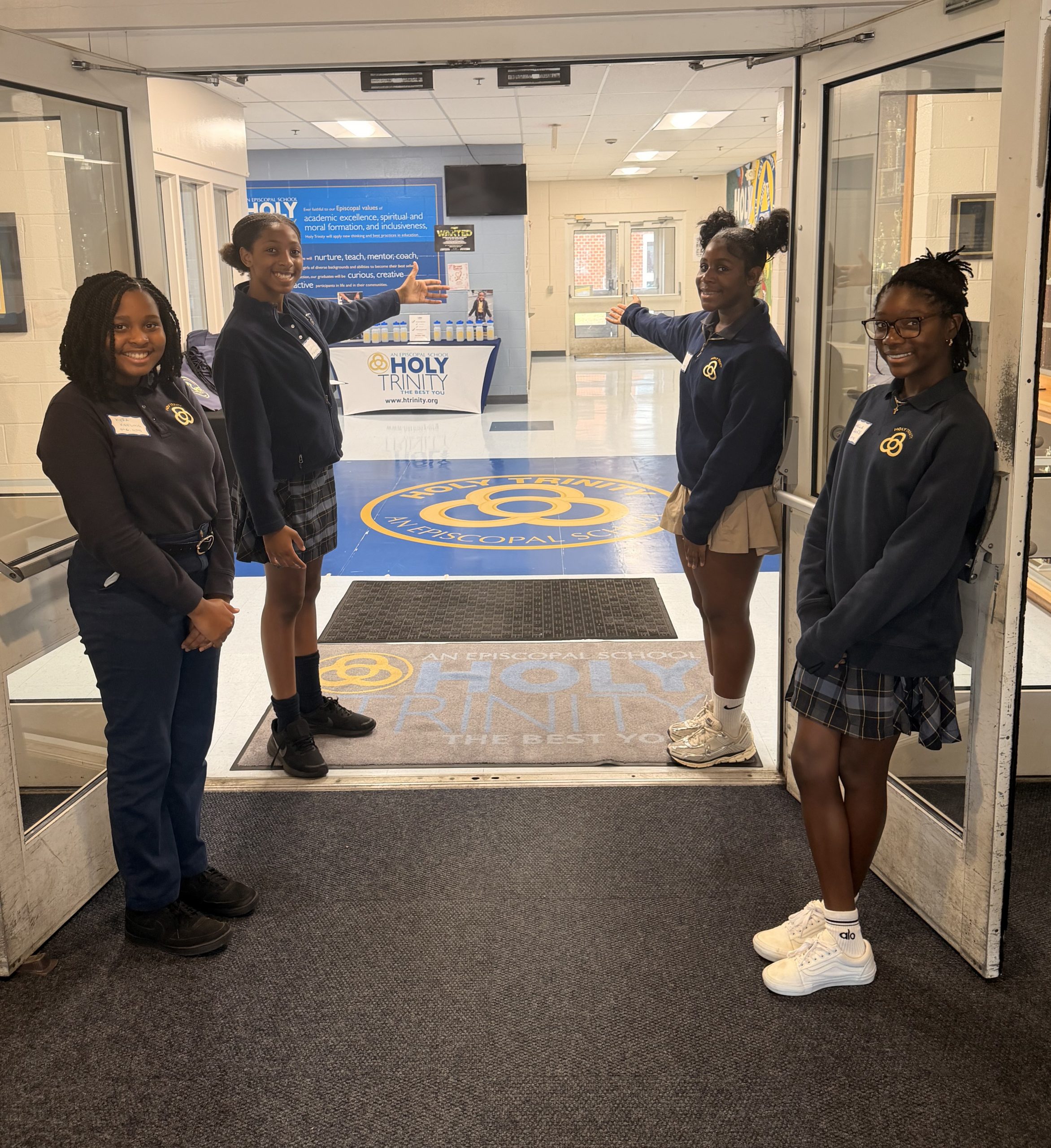
The best way to know whether a school offers both rigor and belonging is to walk its halls, meet its teachers, and watch its students. We invite you to do exactly that.
Join us for our Admission Open House on November 11, 2026. Reserve your spot, schedule a private tour, or request information.
Applying for 2027–2028? Submit your application by January 8th for best consideration. Start your application.
Your child should not have to choose between being seen and being challenged. At Holy Trinity: An Episcopal School, they won’t.